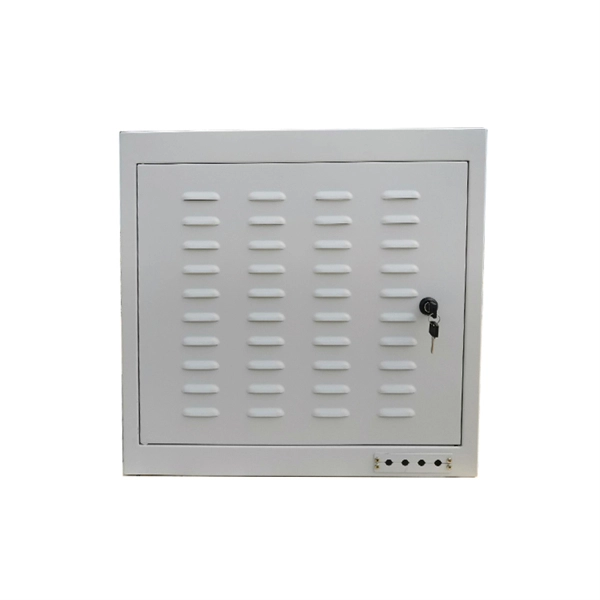
This paper explores the latest trends in the cable tray manufacturing industry, focusing on technological advancements and sustainable practices. It covers the integration of IoT for smart monitoring, the use of innovative materials for enhanced durability, and modern. In 2025, the landscape of cable management has evolved significantly, with cable trays playing a pivotal role in supporting the complex wiring systems of modern infrastructure. The Global Cable Trays and Ladders Market plays a pivotal role in modern infrastructure, enabling secure and efficient routing of power and communication cables in industrial, commercial, and residential environments. These systems provide structural support, organization, and safety in electrical. The cable tray market is projected to grow from USD 4. 3 billion in 2025 to USD 5. Metal will dominate with a 63. 4% market share, while ladder cable trays will lead the product type segment with a 42. This global Cable Tray Systems market research report provides a comprehensive overview by conducting both.
[PDF]

This article unpacks the technologies powering this leap (silicon photonics, advanced modulation, and co-packaged optics), compares deployment paradigms, and delivers a tactical upgrade roadmap that balances performance, cost, and scalability. OFC 2025 made one thing clear: The transition to Co-Packaged Optics (CPO) switches in data centres is inevitable, driven primarily by the power savings they offer. From Jensen Huang showcasing CPO switches at GTC 2025 to a wide range of vendors demonstrating optical engines integrated inside ASIC. AI and cloud traffic surged, driving inter-data-center bandwidth purchases up 330% from 2020 to 2024. By 2025, operators moved past 400G, with 800G becoming the mainstream, and early pilots pushing into 1. 6T 224 Gb/s PAM4 links. Yet supply has lagged demand. In early 2024, primary North American. With 400G modules now the baseline, 800G adoption is surging—especially across AI and hyperscaler environments—while 1. 6T modules edge closer to reality. With 9 years' experience in semiconductor technology, Martin is currently involved in the development of technology &. Active Electronic Cables (AECs) and Active Copper Cables (ACCs) will gradually gain market share at the expense of passive Direct Attached Copper (DACs). AECs and ACCs offer longer reach and are much thinner than DACs. Another advantage of ACCs is lower latency – critical for AI clusters.
[PDF]