
In part one of GIGABYTE Technology's latest Tech Guide, we explore the industry's most advanced cooling solutions so you can evaluate whether your data center can leverage them to get ready for the era of AI. 9 thermal guidelines applied to AI data center cooling — H1 high-density class, B200/GB200 implications, and what's coming in the next revision. Liquid. As Artificial Intelligence (AI) and High-Performance Computing (HPC) workloads drive rack densities beyond 50kW, traditional air cooling is reaching its physical and economic limits. Liquid cooling—specifically Direct-to-Chip (D2C) or Cold Plate technology—has emerged as the standard solution for. Modern AI accelerators have dramatically increasing power requirements, with TDPs rising from 300W (V100) to over 1,400W (MI355X) Heat Output = 700W × 0. 5W thermal BTU/hr = 696. Traditional air-cooling methods are struggling to keep pace with cooling the data center. Compute infrastructures for training large AI models are similar to high-performance computing (HPC) systems, which have long been used for demanding tasks in fields such as engineering, scientific research and finance. Industry insiders familiar with the natural progression of the modern data center will.
[PDF]

Hyperfusion, a leading provider of artificial intelligence (AI) computing solutions, has launched its advanced graphics processing unit (GPU) AI servers in the UAE, aimed at fostering innovation, ensuring security, and shaping the future of AI in the region. Low latency for MENA, Eastern Europe, India and SE Asia inference in H100 GPUs UAE data centres. Deploy production-grade chatbots, customer support agents, and multilingual assistants with a single API call. Stream responses in real time with sub-200ms first-token latency. System prompts. San Francisco, CA & Dubai, UAE – September 30, 2025 – Hyperfusion, the GCC's leading sovereign AI cloud, and CAMB. AI, a global company that enables seamless multilingual communication, today announced a landmark partnership to deliver sovereign, real-time voice AI and agent infrastructure across. Hyperfusion is a leader in high-performance computing and generative AI solutions across the GCC, specialising in secure solutions for AI and ML projects. We only work with the best and global AI leaders to provide cutting-edge cloud compute capabilities tailored to industry needs. Co-founder/CIO. HPC Generative AI Cloud hardware and software solutions. Strategic collaboration combines du's advanced 5G (5G+) connectivity with cutting-edge generative AI technology to transform enterprise video intelligence. The introduction of Hyperfusion's GPU AI.
[PDF]
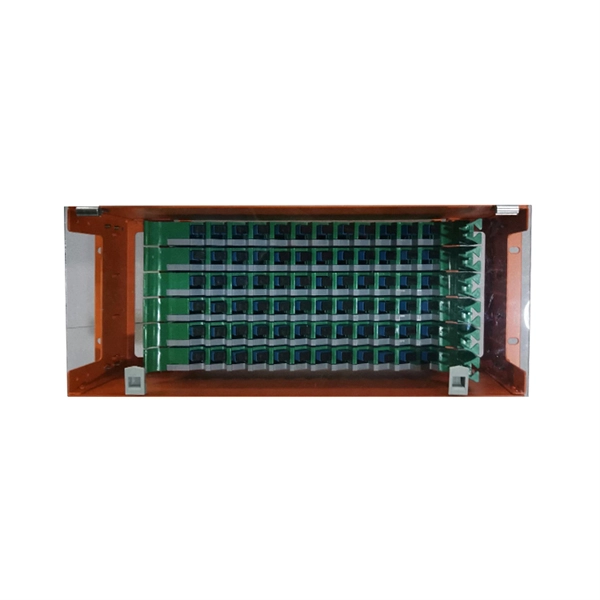
North America held a 38. 2% revenue share of the global AI server industry in 2025. By processor, the GPU-based servers segment held the largest revenue share of 53. Market Size by Server, by Hardware, by Cooling Technology, by Deployment, by Application, by End Use. A comprehensive report by Global Market Insights Inc. The market is expected to grow from USD 167. 2 billion in 2025 to. The global AI server market size was estimated at USD 131. 12 billion by 2033, growing at a CAGR of 21. 2% from 2026 to 2033. Cloud computing and hyperscale data center expansion are driving the market growth. The growth of the AI server market is driven by the increase in data traffic and need for high computing power. 73% during the forecast period. I need the full data tables, segment breakdown, and competitive landscape for detailed regional analysis and. 1 NVIDIA's data center revenue hit $115. 2B in FY2025 (+142% YoY), but market share is projected to decline from 86% to ~75% by 2026 as custom ASICs scale. 2 Hyperscalers are spending $380B+ on AI capex in 2025 while simultaneously building custom chips (TPU, Trainium, Maia, MTIA) that offer 40-65%.
[PDF]
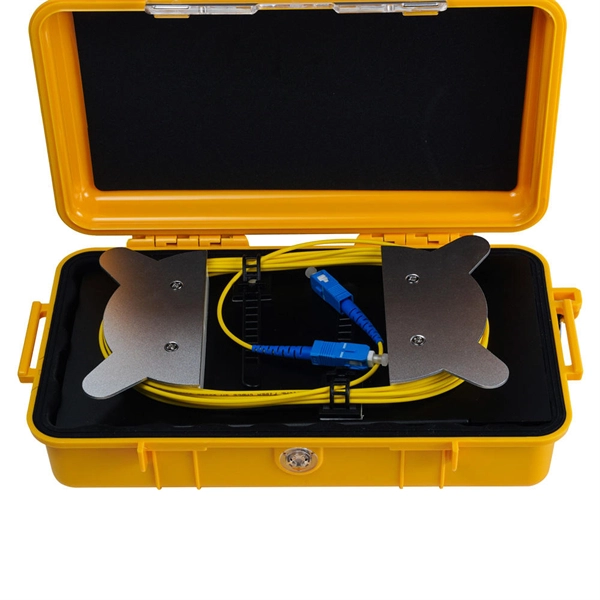
The AI Server Market Analysis highlights rapid deployment driven by rising adoption of AI-based workloads such as natural language processing, computer vision, and large-scale data modeling. Market Size by Server, by Hardware, by Cooling Technology, by Deployment, by Application, by End Use. A comprehensive report by Global Market Insights Inc. projects the global AI server market was valued at USD 128 billion in 2024. The market is expected to grow from USD 167. 16 billion by 2030, growing at a CAGR of 38. 7% from 2025 to 2030. Cloud computing and hyperscale data center expansion are driving the AI servers market growth. 73% during the forecast period. The AI Server Market represents a critical backbone of modern artificial. The AI server market is projected to reach USD 837. The growth of the AI server market is driven by the increase in data traffic and need for high computing power. I need the full data tables, segment breakdown, and competitive landscape for detailed regional analysis and. By 2030, AI server sales will grow even further, pushing the market to US$524 billion, representing an 18% Compound Annual Growth Rate (CAGR). Dell, Hewlett-Packard Enterprise (HPE), Inspur, and Lenovo are market leaders.
[PDF]
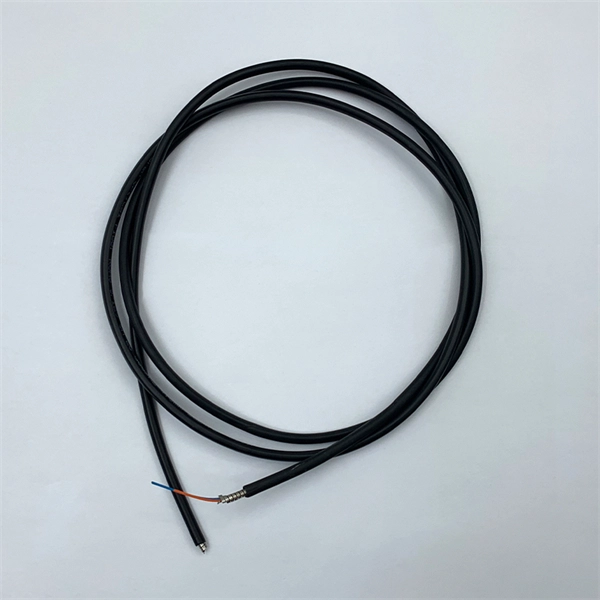
Cost ranges for a residential fiber optic cable run typically span from $1,000 to $12,000, with most projects landing in the $3,000–$8,000 band. The main drivers are trench depth and length, whether the line is buried or aerial, and the in-home termination requirements. The main cost drivers are materials, installation time, and environmental factors that affect trenching, conduit, and terminations. This article provides cost. Installing an optical fiber network is a significant investment that requires careful financial planning. Whether you're upgrading an existing system or starting from scratch, understanding the costs involved can help you allocate your budget wisely. This guide will walk you through the key factors. How Much Does Fiber Optic Cable Cost per Foot? On average, commercial projects range from $5,000 to $20,000 per mile underground and $40,000 to $60,000 per mile for aerial deployment. Individual business connections often cost between $15,000 and $30,000 for 100–200 network drops. Hiring. Homeowners typically pay a broad range for running fiber optic cable from the street to a residence, with the main cost drivers being trenching or aerial installations, cable material, labor time, and permit requirements. The price also varies by fiber type (GPON vs. The price or cost to install fiber reflects material choices, labor hours, and local regulations, with per-mile and per-ft metrics common in.
[PDF]

This qualitative inquiry discusses AI governance in Southeast Asia in the past 5 years and what regulatory policies ASEAN can explore to better modulate its use among its member states. Artificial Intelligence (AI) is a driving force behind ASEAN's ongoing digital transformation. With a rapidly expanding digital economy, AI is projected to contribute between 10% and 18% of the region's GDP by 2030 (Prilliadi, 2025). Among the most disruptive innovations is Generative AI, which. The sixth ASEAN Digital Ministers' Meeting (ADGMIN) held in Hanoi marked a pivotal transition for the region's technical landscape. Under the theme "Adaptive ASEAN: From Connectivity to Connected Intelligence," ministers from the 11 member states—notably including Timor-Leste's historic. onal standards. Recognizing that ASEAN countries are at “different stages of digital development,” the guide is intended to offer ASEAN member states a “flexible” approach to national policies on how to implement, design, develop, and deploy AI systems safely and responsibly, with an eye toward. Only six ASEAN Member States (AMS) have explicit artificial intelligence (AI) strategies, creating regional fragmentation in governance, data protection, and ethical safeguards. It considers the unique political landscape of the region, defined by the adoption of unique norms such as.
[PDF]

By doing so, the Vera Rubin platform treats the data center, not a single GPU server, as the unit of compute. This approach establishes a new foundation for producing intelligence efficiently, securely, and predictably at scale. These servers often have dual 100Gb network interface cards (NICs) connected to separate switches, with strict networking requirements. Deep learning models have highly flexible architectures that allow them to learn directly from raw data. Training deep learning clusters with large data sets can. Retrofitting or deploying AI servers in your legacy data center? Here are the 7 key questions you should ask yourself: 1. Will my existing IT racks be compatible with new AI servers? 2. Can I use my existing power. At Switch, for the last 2 decades, facilities were already being designed using the DNA of AI Factories: extreme power density capabilities, advanced liquid cooling infrastructure and the flexibility to co-evolve with NVIDIA's accelerated road map from Blackwell to Rubin and beyond. Switch's EVO AI. Dell AI Ethernet switches support RoCEv2 and advanced congestion control features designed for consistent, low-latency performance across GPU clusters. Enhanced hashing and optimized throughput help maintain stable job completion times under load. It enhances detection capabilities with powerful features like NeXT AI natural language search, AI alerts, speech transcription, image enhancement. Setting up the AI Key is quick and straightforward.
[PDF]

AI servers are high-performance computing systems designed to process complex artificial intelligence workloads, including large-scale model training and real-time inference. They provide the hardware environment —. AI, or artificial intelligence, is changing the way organizations and businesses handle data by incorporating automation of complex calculations, introducing new advanced applications, and fulfilling computational demands like never before. This is where AI server clusters stand out, crafted for. Modern AI models are data-hungry, computation-heavy beasts that need specialized hardware just to function, let alone perform at their best. That's the job of an AI server—a custom-built system that keeps AI applications fast, scalable, and efficient. An AI server's architecture is all about. What is an AI server? Why artificial intelligence needs specialized systems AI servers are advanced computing systems designed to handle complex, resource-intensive AI workloads. Their capabilities go far beyond those of traditional servers: They are built to support workloads from training to. AI model training and inference workloads are forcing the industry to rethink not only how much compute fits in a rack, but how servers are architected from end to end — transforming computing infrastructure as we know it. These supercomputing systems are designed to execute complex.
[PDF]
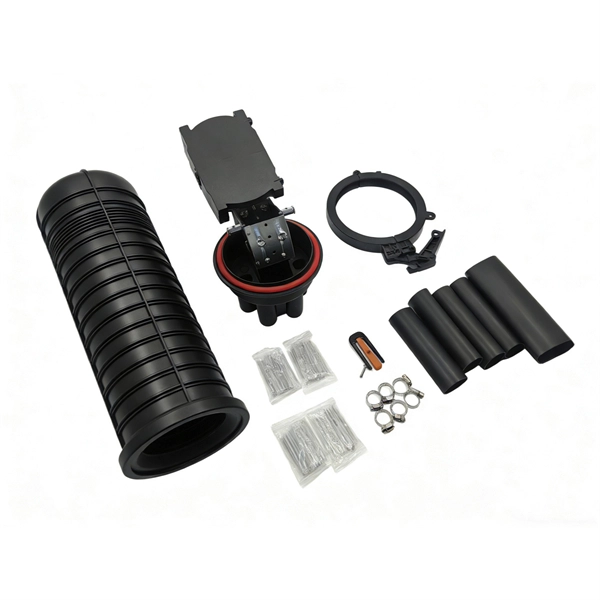
A comprehensive guide to building a powerful self-hosted AI server with web-based chat interface, programmatic API access, and advanced document Q&A capabilities. This setup provides privacy-focused, high-performance AI without cloud dependencies. Combined with SLA targets for TTFT (Time to First Token) and TPOT (Time per Output Token), optimizing throughput at a given latency becomes even more complex. aiconfigurator helps you find a strong starting configuration for disaggregated serving. Given your model, GPU count, and GPU type, it. SQL Model Context Protocol (MCP) Server is available in Data API builder version 1. These tools provide a typed CRUD surface for database operations—creating, reading, updating. The DeGirum AI server software stack allows you to run AI model inferences initiated from multiple remote clients within your local network. The DeGirum AI server software stack can be installed on hosts equipped with AI accelerator cards. The following table lists operating systems, CPU. Build an AI agent and deploy it using Databricks Apps. This approach is ideal when you need custom server behavior, git-based versioning, or local IDE development. If your agent uses only. FileMaker 2025 lets you run and administer your own Claris AI Model Server via the the AI Services page in Admin Console, giving you complete control over your AI models and workflows while keeping sensitive data on your infrastructure.
[PDF]
Diella is an system developed by the of Albania (AKSHI). Introduced in January 2025 as a integrated into the platform, it assists citizens with online public services and issuing digital documents. In September 2025, following a presidential decree authorizing Prime Minister to oversee the creation of a virtual AI mi.
[PDF]
