The bend radius measures how much a cable can be bent before it becomes damaged. Your cable's specifications for this will usually depend on the tensile load applied to it. These measurements will vary.
[PDF]

Our highly-skilled team of professionals specialize in the installation, termination, splicing, and testing of fiber optics technology in virtually every possible environment, including permitting services and challenging right-of-way deployments. From Complex fiber panels and management to LAN. Established in 2013, United Fiber is a leading telecommunications contractor delivering aerial and underground construction, fiber and coax splicing, turnkey engineering, and 24/7 emergency response. Headquartered in Montclair, CA, we serve Los Angeles, Orange County, the Inland Empire, and the. Parker Communications offers expert engineering capability from feasibility through HLD, LLD, and permitting. We excel in fiber network design because our FieldFirst™ engineering approach ensures engineering prints match ground-level conditions. Boots on the ground combined with multi-GIS platform. For decades, MasTec has been at the forefront of wireline infrastructure services, designing, constructing, and maintaining advanced telecommunications networks. Whether it is a new build, an infrastructure upgrade, or site maintenance, our crews handle all aspects of the project—from start to finish. Ervin Cable Construction, LLC (“ECC”) delivers quality turnkey services to multiple cable, energy, and communications companies.
[PDF]

A well-built fiber link rarely fails, but when it does the symptoms can be short, confusing, and expensive to chase. This guide lists the actual, field-proven problems technicians encounter most often and gives step-by-step troubleshooting actions you can copy into your maintenance routine. Keep. Fiber optic troubleshooting is an essential skill for network administrators, technicians, and engineers responsible for maintaining and repairing fiber optic systems. These high-speed, high-capacity communication networks are increasingly replacing copper cables, offering superior performance and. Ever wondered why your blazing-fast fiber optic internet suddenly slows to a crawl, or why your network connection drops out just when you need it most? You're not alone. Fiber optic cables are the backbone of modern industry and communication, but even the most advanced networks can run into. Fiber optic cables are the backbone of today's high-speed communication networks, powering everything from FTTH broadband to data centers. However, like any technology, fiber optic systems can encounter issues that affect performance. Understanding the common causes and solutions helps maintain. Even small forms of damage—from a bent cable to a rodent bite—can disrupt signals, cause costly outages, and require expensive repairs. This article outlines seven common issues that require professional fiber optic services.
[PDF]
Barbados has become the first island in the Caribbean to be fully wired by fiber optics, said FLOW, the regional subsidiary of telecommunications giant Cable & Wireless as it completed its fibre to the home (FTTH) network rollout. The replacement of traditional copper wire with fibre connection. The Barbados Fiber Optic Cable Market is projected to witness mixed growth rate patterns during 2025 to 2029. 48% in 2025, the market peaks at 2. 30%. We are experts in the field of Fiber Optic Design; Installations, Splicing, Testing, Maintenance and Training with highly trained and certified personnel. Our team can integrate the use of Fiber Optics into any “Greenfield” or existing network, on small, medium or large enterprise projects both. Exports In 2022, Barbados exported $9. 12k in Optical fibres and cables, making it the 130th largest exporter of Optical fibres and cables in the world. This expansion has facilitated faster internet speeds and improved connectivity for residents and businesses alike. The high penetration rate of 89% indicates widespread. Also known as 'fiber' or 'fiber internet', fiber-optic internet is an internet connection that can reach high speeds of up to 940mpbs (megabits per second) with little to no lagging. This technology uses fiber-optic cables, sending data at around seventy percent the speed of light.
[PDF]
The standard specifies the geometrical, mechanical, and transmission attributes of a single-mode optical fibre as well as its cable. The fibre has zero-dispersion wavelength around 1310 nm as per how it was designed, however it can also be used in the 1550 nm wavelength region. OverviewG.652 is an. G.652 was originally developed in 1984 by ITU-T Study Group XV. Subsequently, revisions were published in 1988, 1993, 1997, 2000, 2003, 2005, 2009, 2016, and 2024 (from 1997 as Study Group 15).
[PDF]
Long-haul transmission uses fiber optic cables to send data quickly and securely over long distances, connecting cities and countries for fast communication. Whether you're connecting a data center or simply linking your home office to a shop, it's important to understand the fundamental aspects of fiber optic. Long-distance fiber optic transmission is a fascinating field where physics, engineering, and innovation converge to power our digital lives. By leveraging technologies like DWDM, optical amplification, and high-performance coherent optical transceivers from industry leaders like LINK-PP, we. Fiber optic cable transmission distance is determined by two primary physical factors that affect signal quality as light travels through the fiber medium. Attenuation is the progressive loss of signal strength that occurs as light travels through the fiber. The greater the distance, the greater. Fiber optic cables have revolutionized modern communication networks by enabling blazing-fast data transmission across vast distances. However, fiber cable runs are not limitless. This exploration examines their workings, efficiency principles, and modern applications. Glossary terms are explained in the Glossary Section. A fiber optic cable can contain a varying number of glass fibers, from a few up to a couple hundred. Another glass layer called cladding surrounds the glass fiber.
[PDF]
Basic — 1,000 ft single-mode run indoors with minimal termination: Cable $0. 00/ft, Permits $150, Accessories $100. Total ≈ $2,650–$3,100. 60/ft, Permits. How does 6Wresearch market report help businesses in making strategic decisions? 6Wresearch actively monitors the Laos Fiber Optic Cable Market and publishes its comprehensive annual report, highlighting emerging trends, growth drivers, revenue analysis, and forecast outlook. Our insights help. Buyers typically pay for fiber optic cable by length, fiber type, and installation complexity. Main cost drivers include cable grade (indoor vs outdoor, armoured), distance, and labor for trenching, splicing, and termination. We have given over thousands of our clients a reason to be happy with the business results they have gained by using TTV. As per Volza's Laos Import data, Fiber optic cables import shipments in Laos stood at 24, imported by 6 Laos Importers from 8 Suppliers. Laos imports most of its Fiber optic cables from Vietnam and is the largest importer of Fiber optic cables in the World. 50 per meter, depending on several variables. Here's a general pricing reference: Cable TypePrice Range (USD/meter)Simplex / Duplex Indoor Cable$0. 50Multimode (OM1/OM2/OM3)$0. Custom-built cables or niche specifications can lead to higher prices. Fiber Count and.
[PDF]

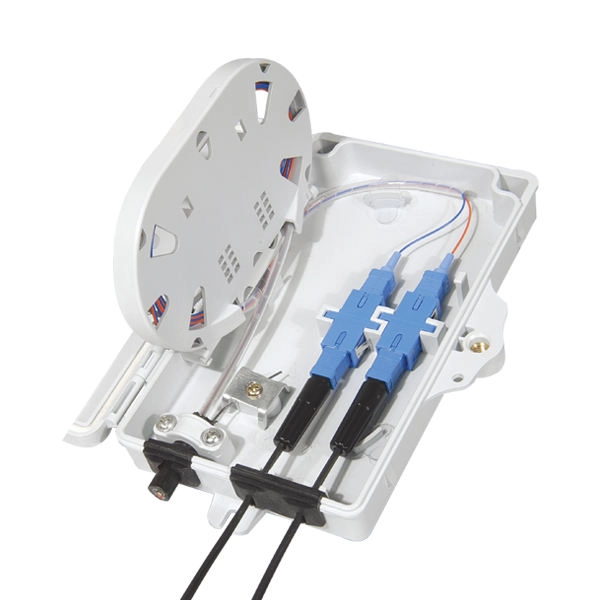
Thus, a fiber termination box is used to terminate the optical fiber cables in the field and connect them to the pigtail by splicing. After an optical cable arrives at the user's end, it is fixed in the terminal box. A fiber pigtail is a specific hardware connection used for cable termination. It serves as a termination point for optical fibers, providing a secure and organized space for connecting and managing fiber optic cables. FTBs play a vital role in ensuring the. A fiber terminal box, also known as a fiber distribution box, is a device used in fiber-optic communication networks to terminate, splice, and distribute optical fibers. It's where delicate strands are protected, splices are routed, connectors are exposed for patching, and future changes are made painless—or painful. Choosing the right fiber optic. The first response is typically to ask what kind of fiber optic installation are you looking at building? This will determine if a box is required or not. If you're ordering or have an existing fiber optic assemby over two strands we highly recommend the use of a termination box as it helps prevent. A Fiber Terminal Box (FTB) is a customer-side termination and distribution device used at the end of the optical network. Key Functions Typical Applications ZION FTB Highlights In essence: The Fiber Terminal Box is an end-user termination device for small-scale distribution. ■ What Is a Fiber.
[PDF]
The fiber connector types, sometimes referred to as terminations, link fiber optic cables together through terminals, switches, adapters, and patch panels, by bridging the gap between their internal glass fi.
[PDF]

Mode conditioning cables serve as effective solutions for enabling gigabit Ethernet transmission over existing multimode fiber optic networks. Operating at 1300nm, they are specifically engineered to mitigate modal dispersion. This page lists all of our OM1 and OM2 fiber optic mode conditioning patch cable products. If you try to connect multi mode to single mode fiber patch cables without mode conditioning. FS offers OM1 & OM2 mode conditioning fiber optic patch cables (MCP) in any connector & cable length, optimal for eliminating differential mode delay effects. We offer Mode Conditioning cables in all varieties and combinations of SC, ST, MT-RJ and LC in. The LightWave Mode Conditionig LC-LC Multimode OM1/Singlemode OS2 Fiber Optic Patch Cable is a Optical Mode Conditioning cable that incorporates Multimode 62. 5/125 and Singlemode 9/125 glass to allow a Singlemode Transiever to communicate to a Multimode Tranceiver. These cables are constructed with a centerline offset splice. Mode Conditioning Patch cords are used to connect multimode fiber plants that use transceiver modules. They are needed because transceiver modules use a single mode launch condition even when they are being used with multimode fiber. These cables are easily installed without any additional fiber.
[PDF]

A fiber pigtail is a short optical fiber cable with a connector pre-installed on one end and a bare fiber on the other. It acts as a bridge between optical fibers and devices, making it a vital part of network termination, splicing, and patching processes. In the world of fiber optic communications, reliability and precision are everything. As networks scale to support FTTH rollouts, 5G base stations, and hyperscale data centers, the way fiber is terminated and managed at every endpoint can determine whether a project succeeds or fails. One component. Executive Summary: A fiber optic pigtail is one of the most commonly specified yet least understood components in structured cabling. Get the wrong connector type, the wrong polish, or skip proper fusion splicing technique—and you're looking at elevated signal loss, increased back reflection, and a. ■ What is a fiber optic pigtail cable? A pigtail fiber indicates a short length of optical fiber cable that has a pigtail connector (for example, SC, FC, ST, LC, etc. ) fitted on one end and the other end undressed (for connection through fusion or splicing) to the main fiber optic cable. What does fiber optic pigtail mean? A fiber optic pigtail works like a bridge between two different connection methods. It is usually suitable for field termination using a mechanical or fusion splicer.
[PDF]
Thus, a fiber termination box is used to terminate the optical fiber cables in the field and connect them to the pigtail by splicing. After an optical cable arrives at the user's end, it is fixed in the terminal box.
[PDF]
Fiber optic cables are often perceived as being fragile and prone to breakage, but this is not entirely accurate. While it is true that fiber optic cables can be damaged if they are bent or flexed too much, they are actually quite durable and can withstand a significant amount of. Fiber-optic cables are the backbone of modern connectivity—powering 5G networks, global internet backbones, and data center interconnections with near-light-speed data transmission. Tension and stress: Fiber optic cables can be damaged if they are subjected to too much tension or stress, as this can cause the fibers to break. To ensure they can fulfil these requirements, developers created and refined fiber optic cables. These cables are made of small strands of fine glass inside an insulating sheath. These tiny glass strands are different from the typical wires you might see in other kinds of cabling. Here are some key points to consider: Installation Processes: During the installation of fiber optic cables, improper handling or excessive tension can lead to damage. Connectors and interfaces, which are relatively. While the glass fibers inside are fragile, modern fiber cables are engineered to withstand crushing forces, extreme temperatures, and even rodent attacks—making them vital for harsh environments. Contrary to myth: A single optical fiber can support 8 kg (17. The cost of a single optical switch can range from $500 to $5,000 or more, depending on the.
[PDF]