See this topic to learn how to remove and install a door. Unlock and open the door. Removing a door Hold the door in place, and lift both hinge pins until they lock in the open position so that the door is disengaged. Remove the door from the rack cabinet frame. Install. Before installing your server in a rack cabinet, review the following guidelines: Two or more people are required to install the device in a rack cabinet. Ensure that the room air temperature is below 35°C (95°F). Do not block any air vents; usually 15 cm (6 in. ) of space provides proper airflow. In this comprehensive guide, we will walk you through the step-by-step process to ensure a successful installation and setup of your network cabinet system. Key steps include measuring the installation area, mounting rails, organizing cables, and testing stability. Proper grounding and compliance with safety. Page 3 M3. Click Side Panels (E) into place. To install the Tempered Glass Door (G), locate the side with two pins. With your thumb, pull down on the spring pin and slide it. Complete Assembly Procedure for 9U Wall Mounted Network Cabinet (Double Section) How to assemble a double section wall mounted network cabinet server rack? 1, Insert top and bottom panels into the side frames. And fixed the frame on the front door position with 4 M5*8 self-tapping screws.
[PDF]
We've talked about why cable management is important. But how do you get started? The first step is to have a plan. Before you even begin, look at where the cables enter and leave your equipment. For exa.
[PDF]
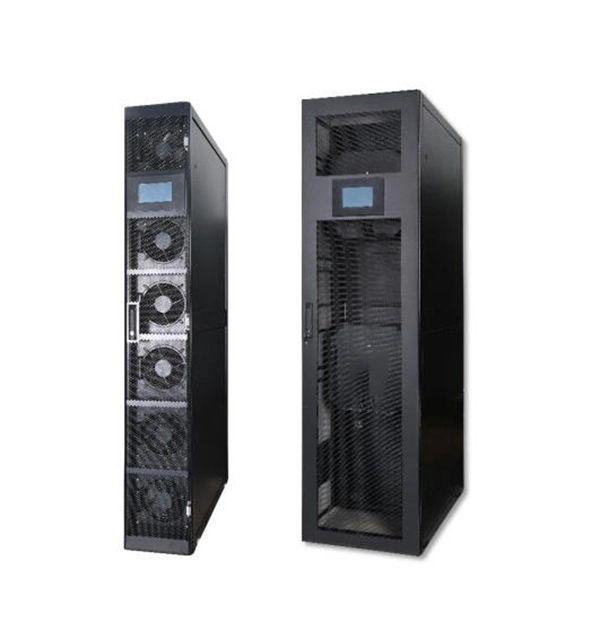
The mounting height of a network rack typically ranges from 24 inches to 84 inches (2 to 7 feet), depending on the equipment and installation requirements. A server rack is more than just a physical frame—it determines how well your rack servers, network switches, PDUs, and storage arrays can be organized, cooled, and maintained. Selecting the right rack size ensures not only compatibility with today's hardware but also room for future expansion. The. Common server rack sizes are 19‑inch width, heights like 42U or 48U, and depths from ~24″ to 48″. Choose size based on equipment type, cooling, space, and future growth. Most IT environments default to 42U, 19-inch width, and 1000–1200 mm depth unless space constraints or special equipment dictate. A rack unit, abbreviated as “U,” is the standard unit of measurement for the height of devices designed for rack mounting. One rack unit equals 1. Important: U describes height only, but a server's real "capabilities" are also determined by chassis depth, internal layout, airflow, rails, power, and expansion (PCIe/risers, NVMe. You'll get precise, vendor-agnostic dimensions for standard server rack sizes—including exact width (19″ internal / 24″ external), height (42U = 73. 5″), depth (24″–48″), and the universal 1U = 1. 75″ rule—plus how to verify usable space, avoid common fitment errors, and select based on equipment.
[PDF]

A rack diagram, also known as a rack elevation, is a visual representation of the organization of IT equipment within a server rack used to track and manage data center assets. You can easily edit this template using Creately's network diagram maker. It is drawn to scale and may show the front and the rear elevation of the rack layout. Rack diagrams can be extremely valuable when selecting equipment or racks to buy, since they are. Need a free Rack Diagram software? Visual Paradigm Online (VP Online) Free Edition, a FREE online diagram software that supports rack diagram, UML, org chart, family tree, ERD, floor plan, etc. With the intuitive Rack Diagram editor you can draw Rack Diagram in seconds. When purchasing equipment, rack diagrams can help you determine which equipment and racks to buy. With Microsoft Visio, you can quickly build a rack diagram from equipment shapes that conform to. Rack Elevation or Server Rack Layout Software are simple tools to plan and document the cabling of your server cabinet. To make it even easier for you, we launched the free online Rack Planner. It provides a clear overview of the physical layout of the rack, including the placement and positioning of servers, switches, storage devices, and other. draw. Both electronics cabinets can be visualised, as well as IT racks with servers and networking hardware, including those provided by specific vendors like APC, Cisco, Dell, F5, HP, IBM and Oracle.
[PDF]

One rack unit equals 1. 45 mm), defined by the EIA-310. Measure your deepest server and add 3–6 inches for cabling and airflow. While rack height is standardized in rack units (U), external dimensions vary by manufacturer. A rack space calculator is a specialized tool designed to help data center professionals, IT administrators, and network engineers determine the optimal placement and space requirements for equipment in server racks. This calculator helps you plan rack layouts by calculating the total rack units. Server rack height is measured in rack units (U). Use the. When planning LAN infrastructure, selecting the correct data rack size is essential for proper equipment fit, ventilation, cable management, and future expansion. A practical formula often used for estimating the required rack size is: Rack size = 1. Common sizes: 42U, 48U, and compact options like 22U–27U. Standard width is 19 inches (EIA-310 compliant), while outer widths vary (e. Rack depth matters for. The three primary dimensions to consider are rack height (measured in rack units or U), rack width (most commonly the industry-standard 19-inch format), and rack depth (typically ranging from 24 inches to 48 inches). Each of these factors influences equipment fit, airflow management, cable routing.
[PDF]

Install clip or retainer nuts in the rack rail locations shown in the following figure. These nuts will secure the 10-32 screws that mount the rack kit's shelf and the device to the rack. For rails with round holes, use clip nuts. Whether you're setting up a home network, small business, or AV closet, this guide walks you through the full installation process — mounting, equipment placement, cable management, and power setup. •. Determine how the device can be oriented in the rack so that the nonport side has access to intake air (cool). Threaded Rack Rail Clip nuts are a long-needed alternative to the traditional and time-consuming cage nuts. I've seen and used both methods, but am still not sure which is best. Is there a recommended way of inserting them? If so, why is it the best way? From my own experience, the horizontal way (on the left) seems. Learn why IT Pros trust StarTech. com for performance connectivity accessories. In this guide, we'll see the tools you'll need, the best and proven practices for server rack setup and network rack setup, and the detailed steps you'll need to follow to achieve an efficient and future-proof infrastructure. A standard rack server is usually used to house and organize different.
[PDF]
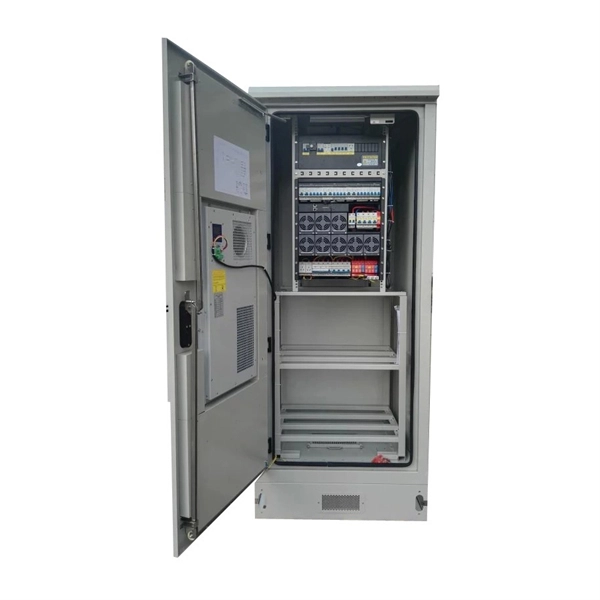
Cool Shield™ containment offers state-of-the-art hot and cold aisle containment solutions designed to maximize data center efficiency while significantly reducing power consumption. In 2024, Worthington Armstrong Venture (WAVE), a joint venture between Armstrong World Industries, Inc. and. Cold aisle containment creates an enclosed corridor in front of server cabinets, ensuring that the coldest air goes directly into equipment intakes. By isolating the cold aisle, containment reduces unintended mixing of cold supply air with hot exhaust air, maintaining uniform, predictable. TRAX hot aisle / cold aisle data center curtains are the industry leading low cost containment solutions. Increase cooling efficiency while measurably lowering energy costs with data center containment solutions by TRAX. Click the button bellow to request a quote or call us directly. Why choose. Aisle containment ceilings, walls and end of row doors are designed to help maintain optimal operating temperature in server rooms and data centres in order to lower data centre energy demands and save on energy costs.
[PDF]

Hyperfusion, a leading provider of artificial intelligence (AI) computing solutions, has launched its advanced graphics processing unit (GPU) AI servers in the UAE, aimed at fostering innovation, ensuring security, and shaping the future of AI in the region. Low latency for MENA, Eastern Europe, India and SE Asia inference in H100 GPUs UAE data centres. Deploy production-grade chatbots, customer support agents, and multilingual assistants with a single API call. Stream responses in real time with sub-200ms first-token latency. System prompts. San Francisco, CA & Dubai, UAE – September 30, 2025 – Hyperfusion, the GCC's leading sovereign AI cloud, and CAMB. AI, a global company that enables seamless multilingual communication, today announced a landmark partnership to deliver sovereign, real-time voice AI and agent infrastructure across. Hyperfusion is a leader in high-performance computing and generative AI solutions across the GCC, specialising in secure solutions for AI and ML projects. We only work with the best and global AI leaders to provide cutting-edge cloud compute capabilities tailored to industry needs. Co-founder/CIO. HPC Generative AI Cloud hardware and software solutions. Strategic collaboration combines du's advanced 5G (5G+) connectivity with cutting-edge generative AI technology to transform enterprise video intelligence. The introduction of Hyperfusion's GPU AI.
[PDF]

SFP optical module is a hot swappable optical module used for 1Gbps network connections. It has a small size and can be plugged into the optical interface of the server, providing connections for fiber and copper cables. That is, metal medium communication represented by coaxial cables and network cables is gradually being replaced by optical fiber media. Composition of Optical Modules The optical module, known as Optical Transceiver in. The Transmitter Optical Sub Assembly (TOSA) is responsible for the emission of light. Its primary function entails converting electrical signals into optical signals. SFP modules are mainly used for short distance fiber optic connections, such. As an essential component of optical fiber communication, optical modules are optoelectronic devices that facilitate the conversion between optical and electrical signals during the transmission process. They are used in fiber optic communication systems to transmit data over long distances with minimal loss and interference. These modules typically consist of a laser or LED transmitter, a. Optical modules can bridge different network components while transmitting and receiving data, ensuring smooth information flow.
[PDF]
These server racks are easy to build and made from materials you can find at just about any hardware store. Build a secure and sturdy server rack that fits all your equipment without spending so much money. Build your own home server rack with these 6 DIY plans. From wood to metal designs, learn how to organize your network gear efficiently and save money today. Whether. In this regard, These DIY server rack plans will help you build a server rack for your home or business. From wooden server racks to compact soundproof cabinets, we have something for everyone – no matter your skill level or space requirements. Our collection of DIY server rack plans features step-by-step. Building your own DIY server rack is an empowering project that offers customization not found in pre-built options. Make a rough list of components I want for my rack. Calculate how much rack height and depth I'll need for those components. This guide walks you through the full process, from choosing.
[PDF]

