Search below to explore initial fiber availability in your area. Login to your CarrierFinder account for detailed insights and full access to carrier data. Enter your address and discover fiber and broadband internet providers. We'll show you which fiber networks and providers serve your address and the best plans. Fiber broadband, or fiber internet, is powered by fiber optic cables and has the potential to transmit data at much higher speeds than DSL or cable internet. How do I know if I have AT&T home internet availability at my address? AT&T home internet availability depends on your address. This means. By integrating Frontier's complementary pure-play fiber network with Verizon's industry-leading Fios and mobility assets, the company now has an expanded reach of almost 30 million fiber passings across 31 states and Washington, D. With the greater availability of premium home internet and. Fiber internet is a broadband connection that runs on light signals from fiber-optic cabling, delivering multi-gig upload and download speeds. It's the fastest and most reliable internet you can get, and most plans come with straightforward pricing and included Wi-Fi equipment. The map will be updated continuously to improve its accuracy through a combination of FCC verification efforts, new data from Internet.
[PDF]
An optical line termination (OLT), also called an optical line terminal, is a device which serves as the service provider endpoint of a passive optical network. It provides two main functions: to perform conversion between the electrical signals used by the service provider's equipment and the fiber optic signals used by the passive optical network.to coordinate the multiplexing between the conversion. FeaturesOLTs include the following features: • A downstream frame processing means for receiving and churning an cell to generate a downstream frame, and converting a parallel dat. Most vendors integrate an entire fiber optic management system for ISPs to manage OLTs as well as client ONTs and as such are not interoperable. • • BT-PON.
[PDF]

The Tellabs FlexSym® Optical Line Terminal One (OLT1) provides a small form-factor OLT supporting both GPON and XGS-PON in the same OLT. Explore our range of high-quality GPON, EPON, and XG (S)PON OLT products. Find the perfect Optical Line Terminal solutions for your network needs. At the heart of a point-to-multi-point or passive optical network (PON) is the optical line terminal (OLT). Modern OLTs offer communication service providers (CSP) the ability to launch multigigabit services to tens of thousands of subscribers from a single location or just ten. It provides flexible choices for designing a modern enterprise network to exactly align with contemporary connectivity. Zyxel's GPON OLTs offer advanced signal processing for dense deployments. Upgrade to gigabit symmetric services today and prepare for tomorrow's technologies. Generic 19" inch ZXA10 C320 GPON OLT 2pcs of SMXA/1 (1. 25G),1pc of GTGH 16 ports with SFP, Optical Line Terminal What is Desertcart? Is it safe to order from?+ Customer service was outstanding when I had questions about the product. Great price for an authentic product. Fast international shipping. High-Performance 16-Port XGS-PON OLT with 40G/100G Uplink CapabilityPLANET XGPL-16000 is a high-density 16-Port XGS-PON Optical Line Terminal ( OLT) designed for next-generation fiber broadband access. Product overview GXR101 Pro is an integrated optical access node combining ONU, OLT.
[PDF]
This paper focuses on a bidirectional isolated dual active bridge (DAB) based dc/dc converter as one of the potential modules for photovoltaic system applications. The DAB converter possesses the functions of bidirectional power ow transfer, and has some advantages, including electrical isolation. Among the available technology, the photovoltaic (PV) panels is a popular solution. Thus, targeted Power Conditioning Systems (PCSs) are drawing increased attention in research. Microconverter is one of the PCS that can support versatile applications in various power line architectures. This work. A solar PV system typically has two safety disconnects. The first is the PV disconnect (or Array DC Disconnect). The PV disconnect allows the DC current between the modules (source) to be interrupted before reaching the inverter. The AC Disconnect is used.
[PDF]

This video shows real on-site footage of electrical installation, demonstrating safe and standardized wiring methods used by professionals. The National Electrical Code (NEC) Section 700. 10 provides critical guidelines for the wiring of emergency systems. These systems ensure continued operation during power outages, protecting lives and maintaining functionality in key buildings. This guide breaks down the essential requirements of. Emergency system circuits supply power to critical life safety loads such as emergency lighting, fire alarm systems, fire pumps, smoke control systems, and essential communication and control circuits. Correct wiring design for emergency system circuits is essential to maintain power integrity. The general rule in 700. 10 (B) is to keep wiring from an emergency source or emergency source distribution overcurrent device to the emergency loads entirely separate from all other wiring and equipment, unless otherwise permitted in 700. 10 (B) (1) through (5). 12) of the interruption of the normal electrical supply.
[PDF]

Explore the comprehensive cost analysis of Optical Line Terminal (OLT) technology, including benefits, features, and long-term value for network operators and service providers. OLT (Optical Line Terminal) cost represents a significant consideration in fiber optic network deployments. An OLT serves as the endpoint hardware in a passive optical network (PON), managing the conversion between electrical and optical signals. With superior performance and reliability, it suits large-scale enterprise infrastructures and service providers. It's ideal for high-speed data transmission and long-haul applications. Pier is a compact, powerful connectivity device for enabling fiber-to-the-x (FTTx) broadband services across extended distances. OLT chassis are the physical enclosures that hold all of the OLT components, such as circuit boards and power supplies, ensuring that everything is securely housed and organized. OLT. Explore our range of high-quality GPON, EPON, and XG (S)PON OLT products. It provides two main functions: to perform conversion between the electrical signals used by the service provider's equipment and the.
[PDF]

The vertical line that split the box in two is the median. Sometimes, the mean is also indicated by a dot or a cross on the box plot. The whiskers are the two lines outside the box, that go from the minimum to the lower quartile (the start of the box) and then from the upper quartile (the end of. Box plots (also called box-and-whisker plots or box-whisker plots) give a good graphical image of the concentration of the data. They also show how far the extreme values are from most of the data. A box plot is constructed from five values: the minimum value, the first quartile, the median, the. The histogram, dot plot and box plot in each separate section represent the same data set. Symmetric (bell shaped) - when graphed, a vertical line drawn at the center will form mirror images, with the left half of the graph being the mirror image of the right half of the graph. Individual scores are represented by dots. Since the scores have been rounded to the nearest second, any given dot might represent more than one score. A box plot displays a ton of information in a simplified format. Analysts frequently use them. Use box plots, also known as box-and-whisker plots, to show the distribution of values along an axis. Boxes indicate the middle 50 percent of the data (that is, the middle two quartiles of the data's distribution). You can configure lines, called whiskers, to display all points within 1.
[PDF]
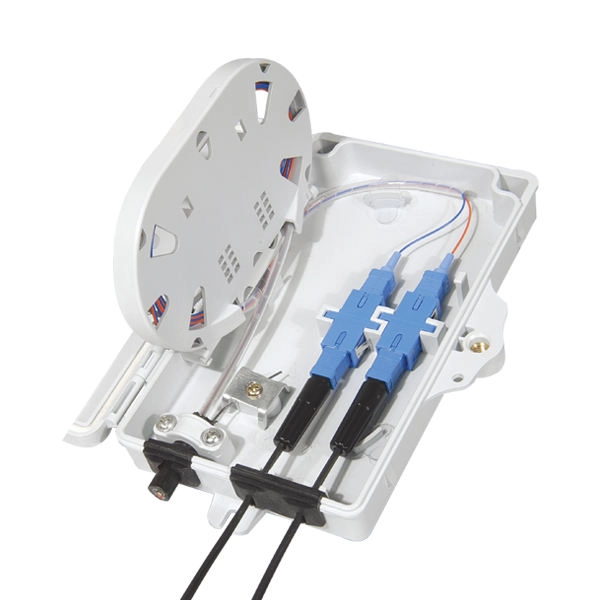
Long-haul transmission uses fiber optic cables to send data quickly and securely over long distances, connecting cities and countries for fast communication. Whether you're connecting a data center or simply linking your home office to a shop, it's important to understand the fundamental aspects of fiber optic. Long-distance fiber optic transmission is a fascinating field where physics, engineering, and innovation converge to power our digital lives. By leveraging technologies like DWDM, optical amplification, and high-performance coherent optical transceivers from industry leaders like LINK-PP, we. Fiber optic cable transmission distance is determined by two primary physical factors that affect signal quality as light travels through the fiber medium. Attenuation is the progressive loss of signal strength that occurs as light travels through the fiber. The greater the distance, the greater. Fiber optic cables have revolutionized modern communication networks by enabling blazing-fast data transmission across vast distances. However, fiber cable runs are not limitless. This exploration examines their workings, efficiency principles, and modern applications. Glossary terms are explained in the Glossary Section. A fiber optic cable can contain a varying number of glass fibers, from a few up to a couple hundred. Another glass layer called cladding surrounds the glass fiber.
[PDF]

Whether you are a home user, managing a small office, or running a business network, this guide will walk you through connecting your ONT to your router, configuring your network, and optimizing your Wi-Fi for smooth performance. However, setting up a fiber optic connection to your router can seem daunting if you're unfamiliar with the process. In this guide, we'll walk you through how to connect a fiber optic cable to a router safely and efficiently. Why Use Fiber Optic Internet? Before diving into the setup, let's quickly. Setting up a fiber internet connection requires understanding key hardware components and following a specific connection sequence to establish your home network. The fiber. Fiber optic internet delivers lightning-fast speeds, reliable connections, and low latency for streaming, gaming, video calls, and more. Setting up your fiber router correctly ensures you get the most from your connection. This comprehensive guide combines industry standards with field-tested practices to ensure you achieve a rock-solid. In this guide, we'll explain router compatibility, setup steps and whether upgrading your router is necessary to maximize fiber speeds. Here's a simple guide to help you through the process: 1. Check Your Fiber Optic Equipment Before you start, make sure you have the necessary equipment: Fiber Optic Modem (ONT – Optical Network Terminal):.
[PDF]
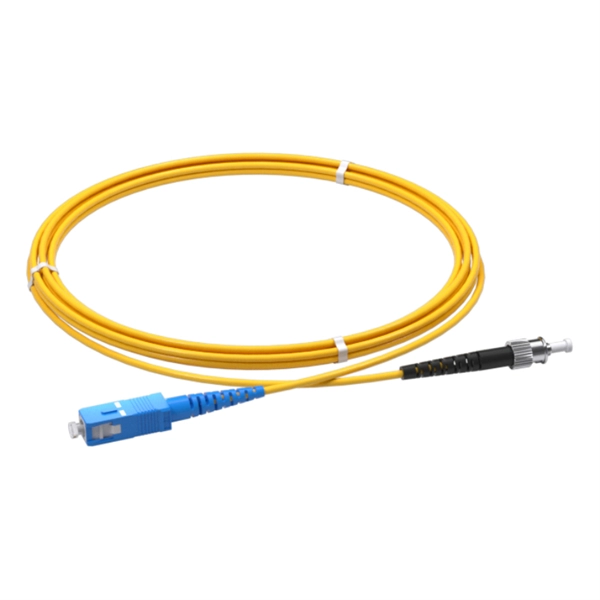
To set up your router for fiber internet quickly, connect the router to your fiber modem, access the router's settings via a web browser, and input the provided ISP credentials. Make sure to update the firmware, configure Wi-Fi security, and customize your network name for. The first step in installing fiber optic cable is running the fiber line from the provider's network to your building. This can be done in two ways: Underground Installation – Fiber cables are placed in conduits underground, offering better protection from weather and physical damage. Since fiber. However, setting up a fiber optic connection to your router can seem daunting if you're unfamiliar with the process. In this guide, we'll walk you through how to connect a fiber optic cable to a router safely and efficiently. In this guide, we'll explain router compatibility, setup steps and whether upgrading your router is necessary to maximize fiber speeds. Make sure you've registered for your service. For quick download, open the camera on your smartphone and hold the camera over the QR code. After a few seconds, a notification will give you a link to open in your browser. Download the Smart Home Manager app from your app store or scan the QR code. The process involves a combination of national infrastructure, local engineering, and property-level setup. What Is Fiber Optic.
[PDF]

It's called a breaker box, and even though it might not look very exciting on the outside, what's behind that little door is the heart of your home's electrical system. Bottom Line Up Front: Your home's distribution box (electrical panel) is typically located in the basement, garage, utility room, or mounted outside near your electrical meter. To find it quickly, look for a rectangular gray metal box about the size of a medicine cabinet, often positioned close to. Electrical panel boxes, aka breaker boxes, can be on a wall in an out-of-the-way area of your home. You can find electric panels inside cabinets, behind refrigerators, or inside clothes closets in older homes. Current National Electrical Codes (NEC) allow none of these locations. Electrical panels. The electrical panel is the central hub that distributes electricity throughout the house. Knowing where to find your electrical panel in your home helps in case of emergencies and routine maintenance. Panels are commonly found in garages, basements, utility rooms, and outdoor walls. Understanding how your electrical panel works can help you troubleshoot issues, perform basic maintenance, and know when to. When something electrical goes wrong in your home—like a tripped circuit or sudden power outage in one part of the house—most people instinctively head to that gray metal panel, often hidden in a basement, utility closet, or garage. Having the breaker box.
[PDF]

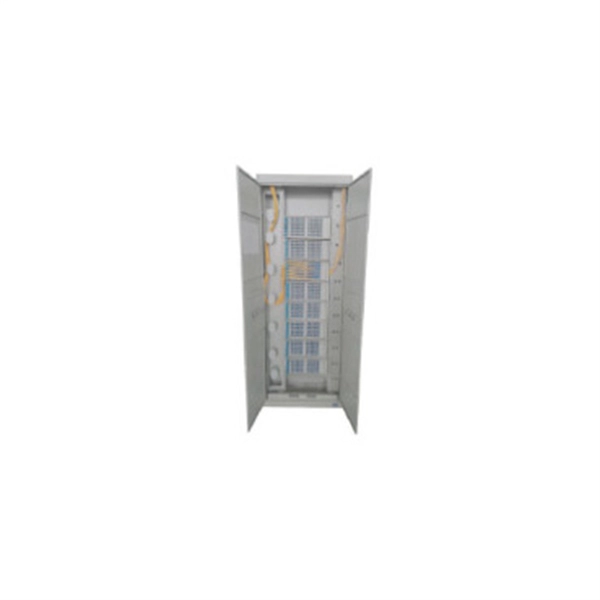
The use of locking cabinets with advanced steel and tamper-resistant designs utilizes physical barriers to limit access to sensitive materials, making them harder to reach for unauthorized individuals. This pressure can cause the gap below server cabinets, which is often 2” or more, to become an air stream between hot and cold aisles. The resulting mix of air reduces the effectiveness of a containment solution. The Cool Shield Magnetic Cabinet Skirt provides an easy fix for this issue. These. Commercial environments have evolved as technology advances, and having a robust cabling infrastructure is crucial for scalability, minimising downtime, and enhancing productivity. Educational institutions are increasingly adopting smart technologies and cloud-based resources, so the foundation of. Many network devices are stored in the cabinets. In order to meet the normal operation of these devices in the cabinets, when the computer room cabinets are full of various cabinets and devices, we need to consider how to place the network cabinets? 1. Network cabinet placement skills (1) Before. A network cabinet is defined as a physically enclosed compartment built to store networking gadgets like patch panels, modems, switches, and a multitude of cables. Network cabinets support large, modular network switches by providing additional space for cable management and side-to-side airflow solutions. Networking cabinets tend to have.
[PDF]
Electricity typically enters homes and buildings from a single line. The main power line connects to a distribution box, which then distributes the electrical power. There are different types of distribution bo.
[PDF]