The AI Server Market Analysis highlights rapid deployment driven by rising adoption of AI-based workloads such as natural language processing, computer vision, and large-scale data modeling. Market Size by Server, by Hardware, by Cooling Technology, by Deployment, by Application, by End Use. A comprehensive report by Global Market Insights Inc. projects the global AI server market was valued at USD 128 billion in 2024. The market is expected to grow from USD 167. 16 billion by 2030, growing at a CAGR of 38. 7% from 2025 to 2030. Cloud computing and hyperscale data center expansion are driving the AI servers market growth. 73% during the forecast period. The AI Server Market represents a critical backbone of modern artificial. The AI server market is projected to reach USD 837. The growth of the AI server market is driven by the increase in data traffic and need for high computing power. I need the full data tables, segment breakdown, and competitive landscape for detailed regional analysis and. By 2030, AI server sales will grow even further, pushing the market to US$524 billion, representing an 18% Compound Annual Growth Rate (CAGR). Dell, Hewlett-Packard Enterprise (HPE), Inspur, and Lenovo are market leaders.
[PDF]

Hyperfusion, a leading provider of artificial intelligence (AI) computing solutions, has launched its advanced graphics processing unit (GPU) AI servers in the UAE, aimed at fostering innovation, ensuring security, and shaping the future of AI in the region. Low latency for MENA, Eastern Europe, India and SE Asia inference in H100 GPUs UAE data centres. Deploy production-grade chatbots, customer support agents, and multilingual assistants with a single API call. Stream responses in real time with sub-200ms first-token latency. System prompts. San Francisco, CA & Dubai, UAE – September 30, 2025 – Hyperfusion, the GCC's leading sovereign AI cloud, and CAMB. AI, a global company that enables seamless multilingual communication, today announced a landmark partnership to deliver sovereign, real-time voice AI and agent infrastructure across. Hyperfusion is a leader in high-performance computing and generative AI solutions across the GCC, specialising in secure solutions for AI and ML projects. We only work with the best and global AI leaders to provide cutting-edge cloud compute capabilities tailored to industry needs. Co-founder/CIO. HPC Generative AI Cloud hardware and software solutions. Strategic collaboration combines du's advanced 5G (5G+) connectivity with cutting-edge generative AI technology to transform enterprise video intelligence. The introduction of Hyperfusion's GPU AI.
[PDF]
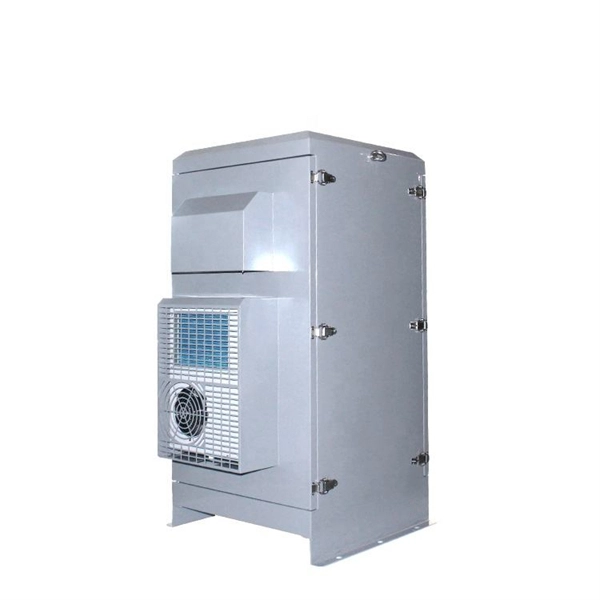
The main types of network security devices include firewalls, intrusion protection systems (IPS), unified threat management (UTM) systems, network access control (NAC), email security gateways, web application firewalls (WAF), and VPN gateways. Network security involves tools, techniques, and policies to protect digital assets from unauthorized access and cyber threats. It combines hardware, software, and expert resources to ensure network integrity and prevent breaches. A key strategy in network security is the multi-layered defense. Network Security devices are typically physical or virtualized hardware appliances, with vendor specific software installed. Firewalls Firewalls act as the first line of defense in network security. These devices act as barriers between the internal network and potential threats from the outside world. Whether you're a business owner or an IT professional, understanding the. A Growing Attack Surface: Every connected device; laptops, servers, IoT devices, peripherals, and physical access points represents an entry vector attackers can exploit. Diverse Threat Actors: From opportunistic hackers and organized crime groups to nation-state actors and insider threats. Network security devices are essential for protecting your network from cyber threats.
[PDF]

Fiber-optic cables naturally embed significant security advantages into their design and operation. This section delves into these inherent security features, showcasing why fiber-optics are the go-to for secure data communication. There's a common myth that fiber optic networks are “unhackable. ” While they are incredibly difficult to tap compared to copper cables, this idea oversimplifies the reality of modern security threats. The truth is, vulnerabilities can exist in the equipment, access points, and software connected to. Fiber optic cables offer superior protection against electromagnetic eavesdropping compared to copper, making passive monitoring significantly more challenging. However, fiber is not invulnerable. Attackers with specialized tools can: Physically access unsecured junctions or cabinets. Unlike. Fiber optic technology offers inherent advantages in speed and bandwidth, making it a preferred choice for modern network systems. However, like any technology, it requires diligent attention to security practices. Secure Your Fiber Optic Infrastructure Overview: Physical security is paramount. Fiber optic networks play a pivotal role in modern internet infrastructure, revolutionizing the way data is transmitted and secured. Fiber Optic technology stands out for its unparalleled efficiency and reliability, offering numerous benefits over traditional copper lines. This fundamental difference.
[PDF]
We propose several attack detection schemes for wireless localization systems. Next, we define test metrics for two broad localization approaches: multilateration. The Internet of Things (IoT) has revolutionized the world, connecting billions of devices that offer assistance in various aspects of users' daily lives. Context-aware IoT applications exploit real-time environmental, user-specific, or situational data to dynamically adapt to users' needs, offering. Wireless Sensor Networks (WSN) support data collection and distributed data processing by means of very small sensing devices that are easy to tamper and cloning: therefore classical security solutions based on access control and strong authentication are di cult to deploy. In this paper we look at. Wireless Sensor Networks (WSNs) rely heavily on localization to provide location aware services for applications including military surveillance, smart agriculture, environmental monitoring and healthcare. Morden methods that combine range-based and range-free techniques including Time of Arrival. Location-awareness plays a crucial role in many wireless network applications, such as localization services in next generation cellular networks, search-and-rescue operations, logistics, and blue force tracking in battlefields. The performance of such networks can be significantly improved via the use of.
[PDF]

This qualitative inquiry discusses AI governance in Southeast Asia in the past 5 years and what regulatory policies ASEAN can explore to better modulate its use among its member states. Artificial Intelligence (AI) is a driving force behind ASEAN's ongoing digital transformation. With a rapidly expanding digital economy, AI is projected to contribute between 10% and 18% of the region's GDP by 2030 (Prilliadi, 2025). Among the most disruptive innovations is Generative AI, which. The sixth ASEAN Digital Ministers' Meeting (ADGMIN) held in Hanoi marked a pivotal transition for the region's technical landscape. Under the theme "Adaptive ASEAN: From Connectivity to Connected Intelligence," ministers from the 11 member states—notably including Timor-Leste's historic. onal standards. Recognizing that ASEAN countries are at “different stages of digital development,” the guide is intended to offer ASEAN member states a “flexible” approach to national policies on how to implement, design, develop, and deploy AI systems safely and responsibly, with an eye toward. Only six ASEAN Member States (AMS) have explicit artificial intelligence (AI) strategies, creating regional fragmentation in governance, data protection, and ethical safeguards. It considers the unique political landscape of the region, defined by the adoption of unique norms such as.
[PDF]

AI servers are high-performance computing systems designed to process complex artificial intelligence workloads, including large-scale model training and real-time inference. They provide the hardware environment —. AI, or artificial intelligence, is changing the way organizations and businesses handle data by incorporating automation of complex calculations, introducing new advanced applications, and fulfilling computational demands like never before. This is where AI server clusters stand out, crafted for. Modern AI models are data-hungry, computation-heavy beasts that need specialized hardware just to function, let alone perform at their best. That's the job of an AI server—a custom-built system that keeps AI applications fast, scalable, and efficient. An AI server's architecture is all about. What is an AI server? Why artificial intelligence needs specialized systems AI servers are advanced computing systems designed to handle complex, resource-intensive AI workloads. Their capabilities go far beyond those of traditional servers: They are built to support workloads from training to. AI model training and inference workloads are forcing the industry to rethink not only how much compute fits in a rack, but how servers are architected from end to end — transforming computing infrastructure as we know it. These supercomputing systems are designed to execute complex.
[PDF]

By doing so, the Vera Rubin platform treats the data center, not a single GPU server, as the unit of compute. This approach establishes a new foundation for producing intelligence efficiently, securely, and predictably at scale. These servers often have dual 100Gb network interface cards (NICs) connected to separate switches, with strict networking requirements. Deep learning models have highly flexible architectures that allow them to learn directly from raw data. Training deep learning clusters with large data sets can. Retrofitting or deploying AI servers in your legacy data center? Here are the 7 key questions you should ask yourself: 1. Will my existing IT racks be compatible with new AI servers? 2. Can I use my existing power. At Switch, for the last 2 decades, facilities were already being designed using the DNA of AI Factories: extreme power density capabilities, advanced liquid cooling infrastructure and the flexibility to co-evolve with NVIDIA's accelerated road map from Blackwell to Rubin and beyond. Switch's EVO AI. Dell AI Ethernet switches support RoCEv2 and advanced congestion control features designed for consistent, low-latency performance across GPU clusters. Enhanced hashing and optimized throughput help maintain stable job completion times under load. It enhances detection capabilities with powerful features like NeXT AI natural language search, AI alerts, speech transcription, image enhancement. Setting up the AI Key is quick and straightforward.
[PDF]
Diella is an system developed by the of Albania (AKSHI). Introduced in January 2025 as a integrated into the platform, it assists citizens with online public services and issuing digital documents. In September 2025, following a presidential decree authorizing Prime Minister to oversee the creation of a virtual AI mi.
[PDF]
