In part one of GIGABYTE Technology's latest Tech Guide, we explore the industry's most advanced cooling solutions so you can evaluate whether your data center can leverage them to get ready for the era of AI. 9 thermal guidelines applied to AI data center cooling — H1 high-density class, B200/GB200 implications, and what's coming in the next revision. Liquid. As Artificial Intelligence (AI) and High-Performance Computing (HPC) workloads drive rack densities beyond 50kW, traditional air cooling is reaching its physical and economic limits. Liquid cooling—specifically Direct-to-Chip (D2C) or Cold Plate technology—has emerged as the standard solution for. Modern AI accelerators have dramatically increasing power requirements, with TDPs rising from 300W (V100) to over 1,400W (MI355X) Heat Output = 700W × 0. 5W thermal BTU/hr = 696. Traditional air-cooling methods are struggling to keep pace with cooling the data center. Compute infrastructures for training large AI models are similar to high-performance computing (HPC) systems, which have long been used for demanding tasks in fields such as engineering, scientific research and finance. Industry insiders familiar with the natural progression of the modern data center will.
[PDF]
According to a recent study by the Fiber Broadband Association and RVA, 76. 5%) are now serviceable by fiber—an increase of 13% in 2024. By 2028, fiber is expected to reach 80% of U. Ultra-low loss (ULL) fiber directly addresses this issue, allowing data to travel farther with fewer interruptions. By minimizing signal loss, ULL fiber makes it possible to build high-capacity, long-haul networks that can support growing global demand. ULL fiber delivers clear advantages for. When viewed within its broader parent sector, the Communications Hardware market, which is expected to reach about $1,018 billion by the same year, fiber optics will comprise roughly 1% of this larger segment. Further, in the context of the overall Information Technology industry anticipated to hit. Gerald. As the industry looks ahead, six major trends are shaping the future of fiber.
[PDF]

Connect all three phases and the neutral wire to the input of the residual-current device. An overcurrent circuit breaker is connected at the output to each phase. It is an electrical protective device that protects electrical circuits and devices from some electrical faults such as leakage faults, electrical shock, current unbalance due to equipment failure, etc. It works on the principle of sensing residual current which is why it is called a residual. Distribution board is a safe system designed for house or building that included protective devices, isolatorswitches, circuit breaker and fuses to connect safely the cables and wires to the sub circuits and final sub circuits including their associated Live (Phase) Neutral and Earth conductors. A residual-current device (RCD), protects the user of the installation against electric shock. Therefore, not only the efficiency and reliability, but also the proper connection of this device is important. Make sure you have watched the linked video below on how to strip and prepare wires and cables for termination before you do any wiring:. more Audio tracks for some languages were automatically generated. This guide provides a detailed, professional procedure for installing a Residual Current Circuit Breaker (RCCB)—a device essential for protecting people from the severe danger of electric shock. The steps outlined here are fundamental to ensuring the RCCB functions correctly as a life-saving.
[PDF]

RCCBs (Residual Current Circuit Breakers) should be installed in key areas of your home's electrical system for maximum safety. The best place to install an RCCB is in the distribution board (DB box), which controls the electrical circuits throughout your home. This location ensures that the RCCB protects the entire electrical system by monitoring the current flow throughout. For added protection, you can also. A residual-current device (RCD), residual-current circuit breaker (RCCB) or ground fault circuit interrupter (GFCI) is an electrical safety device, more specifically a form of Earth-leakage circuit breaker, that interrupts an electrical circuit when the current passing through line and neutral. The primary function of an RCD is to monitor the electrical current flowing in a circuit and quickly disconnect the power supply if it detects an imbalance current (leakage of current to ground) between the live and neutral conductors. An RCD is essentially a current-operated ELCB and is commonly. RCCB Definition: A Residual Current Circuit Breaker (RCCB) is defined as a safety device that detects and interrupts a circuit when there is a leakage current to the ground. It can swiftly disconnect the circuit when a fault current happens and prevent wiring damage. In this article, we explain what an RCBO is and how it.
[PDF]
Diella is an system developed by the of Albania (AKSHI). Introduced in January 2025 as a integrated into the platform, it assists citizens with online public services and issuing digital documents. In September 2025, following a presidential decree authorizing Prime Minister to oversee the creation of a virtual AI mi.
[PDF]
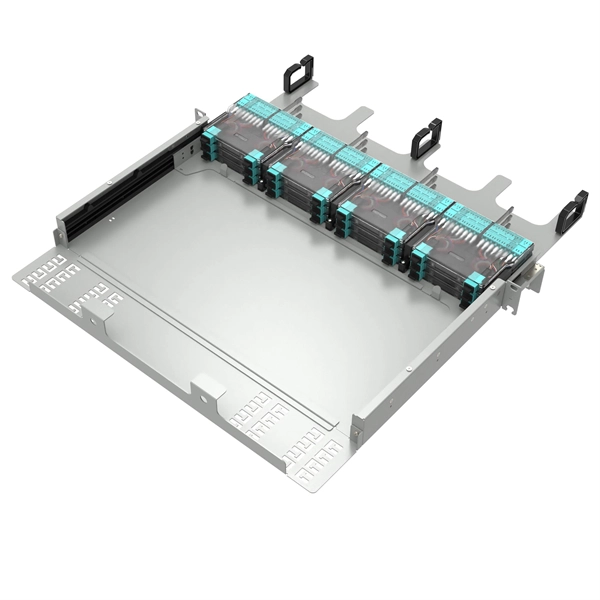
AI servers are high-performance systems specifically designed to process complex AI workloads, including model training and real-time inference. Apple has begun delivering Houston-made AI servers to its data centers nationwide ahead of schedule, a step in scaling its in-ecosystem AI while reshoring some of its manufacturing. They provide the hardware environment —. RedSwitches AI dedicated servers are architected from the ground up to support artificial intelligence workloads. Our infrastructure. At Google Cloud Next '26, we announced that more than 50 Google-managed Model Context Protocol (MCP) servers are generally available or in preview, with more on the way. Why it matters: To move beyond experimental prototypes, AI agents must be able to access real-world data and solve complex. Running AI models on a local AI server is one of the most empowering steps you can take in your AI journey. Instead of depending on cloud APIs, you can bring the intelligence directly onto your own hardware, which unlocks: Improved privacy and security: With locally hosted AI, your data never. Raghav Sethi began his tech writing journey in 2022, contributing to his college's open-source community blog. Later that year, he joined MakeUseOf, and since then has written extensively about Apple, Android, and AI. His work ranges from hands-on experiments to opinion pieces that explore the.
[PDF]
A comprehensive guide to building a powerful self-hosted AI server with web-based chat interface, programmatic API access, and advanced document Q&A capabilities. This setup provides privacy-focused, high-performance AI without cloud dependencies. Combined with SLA targets for TTFT (Time to First Token) and TPOT (Time per Output Token), optimizing throughput at a given latency becomes even more complex. aiconfigurator helps you find a strong starting configuration for disaggregated serving. Given your model, GPU count, and GPU type, it. SQL Model Context Protocol (MCP) Server is available in Data API builder version 1. These tools provide a typed CRUD surface for database operations—creating, reading, updating. The DeGirum AI server software stack allows you to run AI model inferences initiated from multiple remote clients within your local network. The DeGirum AI server software stack can be installed on hosts equipped with AI accelerator cards. The following table lists operating systems, CPU. Build an AI agent and deploy it using Databricks Apps. This approach is ideal when you need custom server behavior, git-based versioning, or local IDE development. If your agent uses only. FileMaker 2025 lets you run and administer your own Claris AI Model Server via the the AI Services page in Admin Console, giving you complete control over your AI models and workflows while keeping sensitive data on your infrastructure.
[PDF]
The AI Server Market Analysis highlights rapid deployment driven by rising adoption of AI-based workloads such as natural language processing, computer vision, and large-scale data modeling. Market Size by Server, by Hardware, by Cooling Technology, by Deployment, by Application, by End Use. A comprehensive report by Global Market Insights Inc. projects the global AI server market was valued at USD 128 billion in 2024. The market is expected to grow from USD 167. 16 billion by 2030, growing at a CAGR of 38. 7% from 2025 to 2030. Cloud computing and hyperscale data center expansion are driving the AI servers market growth. 73% during the forecast period. The AI Server Market represents a critical backbone of modern artificial. The AI server market is projected to reach USD 837. The growth of the AI server market is driven by the increase in data traffic and need for high computing power. I need the full data tables, segment breakdown, and competitive landscape for detailed regional analysis and. By 2030, AI server sales will grow even further, pushing the market to US$524 billion, representing an 18% Compound Annual Growth Rate (CAGR). Dell, Hewlett-Packard Enterprise (HPE), Inspur, and Lenovo are market leaders.
[PDF]

AI servers are high-performance computing systems designed to process complex artificial intelligence workloads, including large-scale model training and real-time inference. They provide the hardware environment —. AI, or artificial intelligence, is changing the way organizations and businesses handle data by incorporating automation of complex calculations, introducing new advanced applications, and fulfilling computational demands like never before. This is where AI server clusters stand out, crafted for. Modern AI models are data-hungry, computation-heavy beasts that need specialized hardware just to function, let alone perform at their best. That's the job of an AI server—a custom-built system that keeps AI applications fast, scalable, and efficient. An AI server's architecture is all about. What is an AI server? Why artificial intelligence needs specialized systems AI servers are advanced computing systems designed to handle complex, resource-intensive AI workloads. Their capabilities go far beyond those of traditional servers: They are built to support workloads from training to. AI model training and inference workloads are forcing the industry to rethink not only how much compute fits in a rack, but how servers are architected from end to end — transforming computing infrastructure as we know it. These supercomputing systems are designed to execute complex.
[PDF]